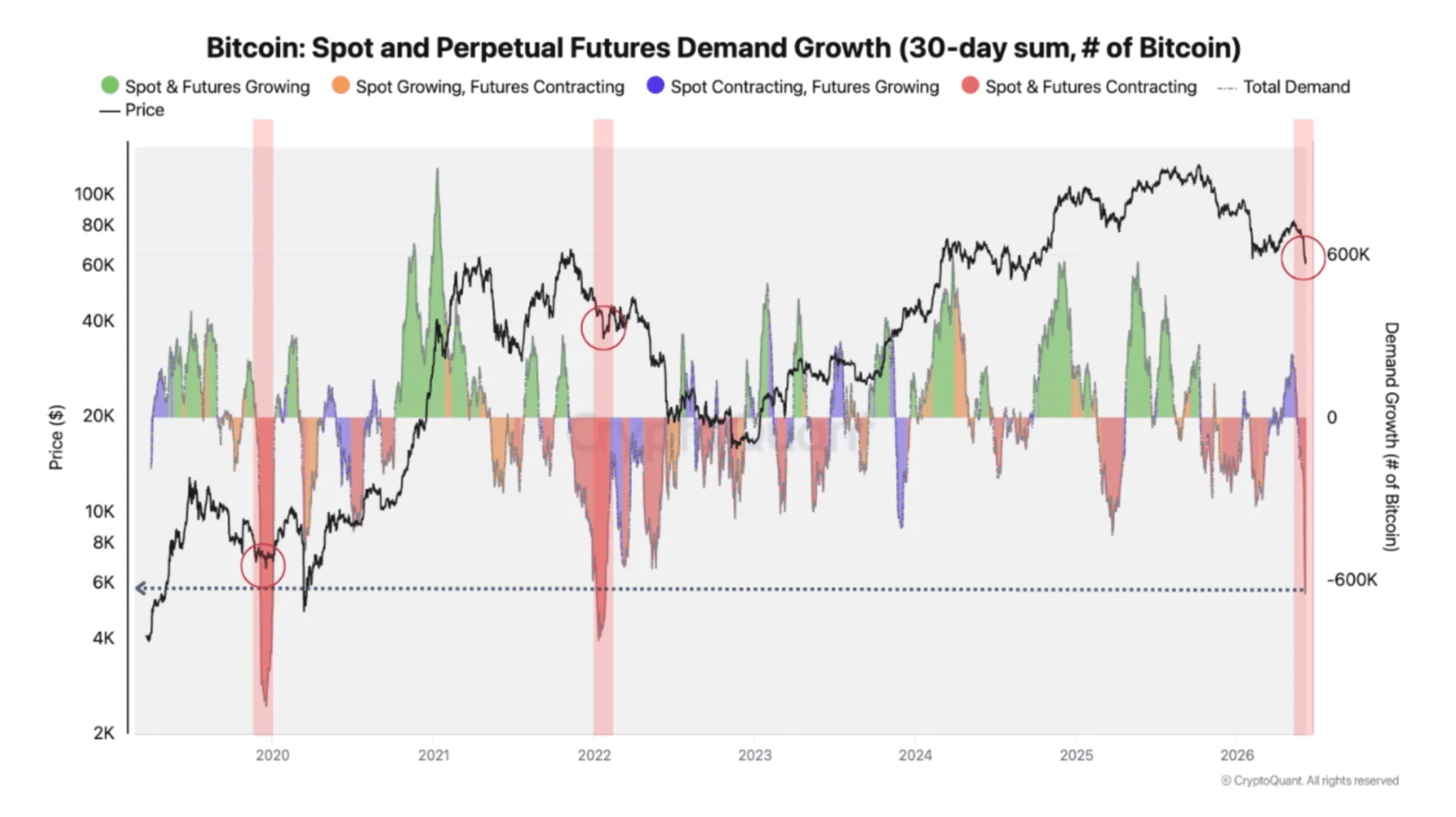
Bitcoin’s demand structure has deteriorated sharply by the end of 2026. The combined demand growth for spot and perpetual futures has fallen to -650,000 BTC, a level reached only three times since 2019.
This matters because the weakness now extends beyond leveraged traders and into organic market demand.
Historically, similar contractions occurred before major periods of instability.
First, demand collapsed before the March 2020 crash. Later, a similar deterioration occurred during the 2022 bear market. In both cases, extreme numbers indicated structural exhaustion rather than immediate recovery.
Now Bitcoin faces a similar test. Fewer spot buyers are coming in, while derivatives exposure continues to shrink. As a result, the market has less capacity to absorb the pressure of new sales.
However, this does not automatically imply a new sharp decline. Instead, history suggests that volatility may increase first. After that, Bitcoin could enter a prolonged phase of weak momentum and moderate participation.
Until demand begins to recover from these extreme levels, price action may remain fragile despite approaching long-term value zones.
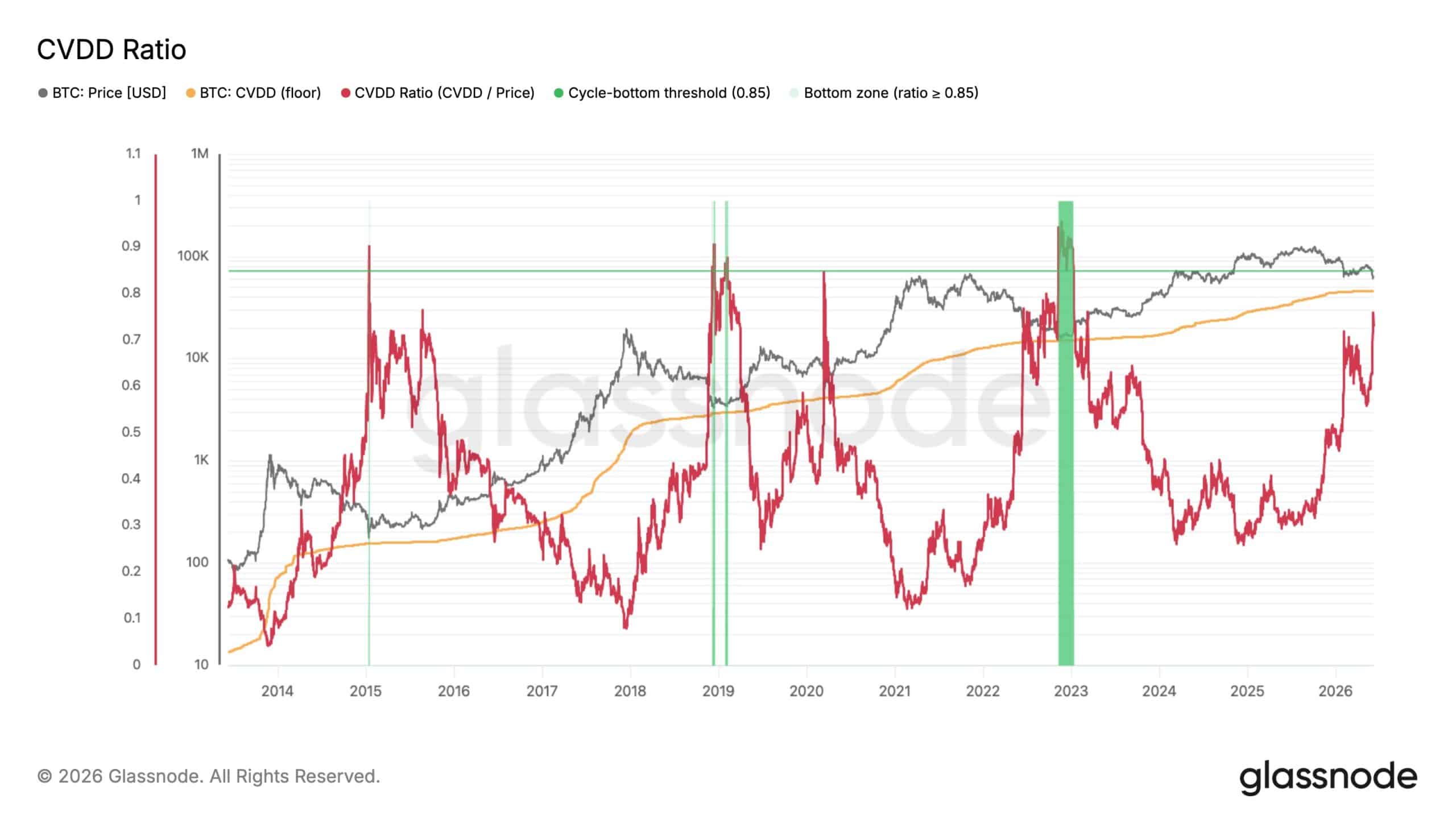
CVDD ratio rises towards cycle bottom thresholds
Bitcoin’s weakening demand profile continues to weigh on sentiment.
However, valuation metrics are starting to offer a different perspective.
The (cumulative value days destroyed) CVDD price ratio has risen to 0.73 and is getting closer to the historical cycle bottom of almost 0.85.