
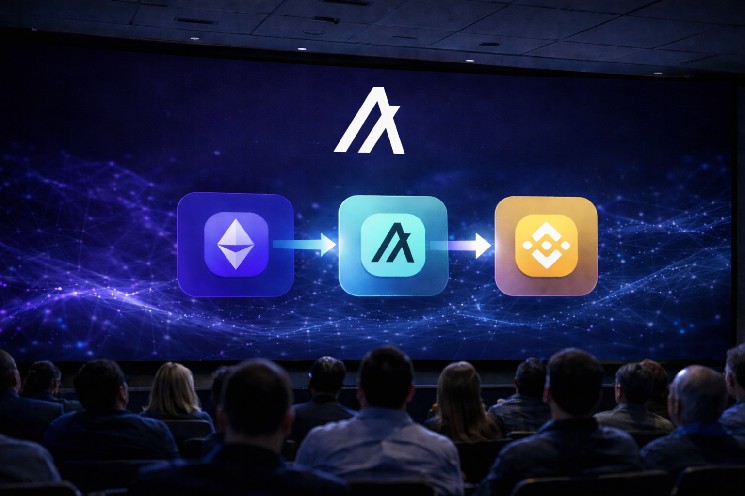
- Algorand is building a cross-chain account abstraction system that allows users to manage their accounts directly using EVM wallets such as Metamask or Rainbow.
- The feature is built on Ethereum’s EIP-8141, making programmable smart accounts a native protocol-level feature.
Algorand is opening up its ecosystem to the Ethereum network with a new feature that allows EVM wallet users to sign transactions directly on Algorand.
The network has announced that it is providing cross-chain account abstraction that allows Metamask, Rainbow, and any other wallet built on the Ethereum Virtual Machine (EVM) to connect directly to its dApps.
You don’t need a new wallet to use Algorand.
We provide cross-chain account abstraction that allows MetaMask, Rainbow, and virtually any EVM wallet to connect directly to Algorand dApps.
No custody tricks. No shared signature risk.
Your EVM key authorizes an abstracted Algorand…
— Algorand Foundation (@AlgoFoundation) March 2, 2026
Explaining the new feature, one of the Algorand Foundation’s core engineers explained that it is an improvement to the network’s Logic Signatures. These are signatures controlled by code, not just a private key, and determine before approval whether a given transaction meets predetermined requirements. It’s a break from the popular industry model that only allows private keys to authorize transactions.
Algorand now connects the EVM to its AVM execution environment, where smart contracts are executed. He stated:
We are working on an EVM to AVM account abstraction system. This means that you can use your Metamask, Rainbow or any EVM wallet to interact with Algorand dApps natively.
Connecting Algorand to Ethereum’s extensive DeFi network
The new feature provides complete isolation on Algorand. Users can approve transactions on the network from their Metamask or Rainbow EVM wallet in an isolated domain. The signatures they use on the network are, by design, useless anywhere else in the EVM world.
It will also be self-custody, where the abstracted account is a piece of code that validates the signature of the EVM account. Only a user’s private key can authorize transactions.
The Foundation has provided a new toolkit that allows developers to easily implement the standard and bring any EVM wallet to their Algorand app with just a few configuration lines.
The feature comes days after Ethereum founder Vitalik Buterin discussed account abstraction, highlighting EIP-8141 as an omnibus for the work the Ethereum Foundation has been doing for a decade.
Now, account abstraction.
We’ve been talking about account abstraction since early 2016, see the original EIP-86: https://t.co/HYLSTLHgWH
Now we finally have EIP-8141 (https://t.co/jYqeS55j6P), an omnibus that wraps up and solves every remaining problem of AA…
— vitalik.eth (@VitalikButerin) February 28, 2026
One of the new features under the EIP is frame transactions, which involve multiple steps such as validation, optional gas authorization, execution, and deployment. Frame transactions support multisigs, new signatures resistant to quantum attacks, gas paid in different tokens and privacy protocols.
He summarized it:
Basically the same as what is done in existing sponsored transaction mechanisms, but without the need for intermediaries (!!!!). Intermediary minimization is a core principle of non-ugly cypherpunk ethereum: maximize what you can do even if the entire infrastructure of the world, except the ethereum chain itself, goes down.
Account abstraction on Ethereum will align with FOCIL, the proposed main change under the upcoming Hegota upgrade. As CNF reported, Hegota is scheduled for release later this year.
“FOCIL ensures fast transaction withdrawal guarantees, and AA ensures that all the more complex operations that people want to perform can be executed immediately as first-class transactions,” says Vitalik.