
The trading industry stands at a critical crossroads: challenged by issues of financial trust and token volatility, it is driven by opaque token management, unstable value dynamics, and systemic barriers that limit trader participation. Simultaneously, the sector is experiencing unprecedented growth: online trading platforms are forecasted to surge to $17.46 billion by 2033, while global crypto ownership has surpassed 560 million users. This expanding frontier demands trading ecosystems that are not only innovative but fundamentally transparent, sustainable, and trustworthy. Against this backdrop, Viperium is reshaping tokenomics to set a new standard for a transparent and resilient trading ecosystem.
The VPR token forms the backbone of this ecosystem, offering more than just transactional utility, it empowers users to become active stakeholders by staking tokens to fund new traders and earn 20% APR in stable USD coins. This mechanism not only cultivates long-term holding but also effectively reduces token circulation, stabilizing value. Crucially, Viperium integrates a buyback-and-burn process that allocates 6% of net profits equally between repurchasing tokens to permanently remove them from circulation and rewarding top traders, aligning incentives and fostering a thriving community. Transparency is embedded at every layer, with on-chain verification reinforcing trust and accountability, while a locked treasury safeguards ecosystem longevity. Upcoming token sale rounds, strategically priced at $0.10 and $0.15, signal robust market confidence and thoughtful growth planning. Through this holistic, self-sustaining design, Viperium not only mitigates traditional tokenomics pitfalls like inflation and volatility but also sets a compelling blueprint for the future of transparent and resilient trading platforms.
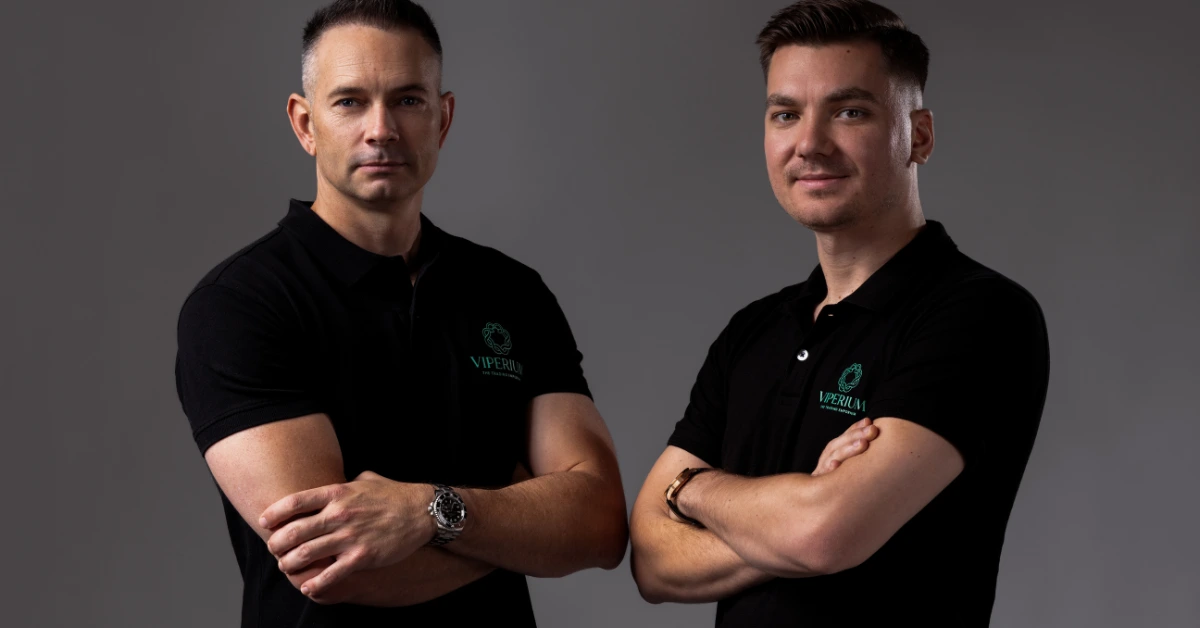
To gain a profound understanding of the principles shaping Viperium’s tokenomics and to unpack the value-creation mechanisms at its core we engaged in an in-depth discussion with the two visionary Co-Founders of Viperium: Jonathane Stephenson, the CFO, and Victor Dinescu, the CEO.
1. The VPR token serves multiple strategic functions across the Viperium ecosystem: staking, account funding, and tiered progression. Victor, can you elaborate on how the synergy between these utilities fosters sustainability and aligns the interests of traders, token holders, and the platform itself?
Victor: Our ecosystem functions in a way that’s structurally similar to a decentralized banking environment. Participants can stake the VPR token directly into the platform, creating a liquidity pool that enables us to fund traders with the capital they need to progress through their performance tiers. This mechanism builds a self-sustaining cycle where stakers provide stability and liquidity, while traders generate platform activity and performance metrics, and the system continuously recycles value back into the ecosystem. In addition, token holders gain access to exclusive platform features such as jumping tiers, performance incentives, and skipping the waitlist. Staking remains a core pillar of our model as it accelerates platform growth, supports higher user onboarding capacity, and rewards participants with an amazing 20% APR paid in USD, reinforcing both trust and long-term engagement between traders, token holders, and the platform itself.
2. Viperium offers an estimated 20% APR to stakers paid in USD stablecoins. Jonathane, could you walk us through the economic models and risk management frameworks that support this yield, and how you dynamically balance liquidity needs with token value preservation?
Jonathane: Our Earn program is designed as an optional platform service, and its structure is intentionally conservative and transparent. When we offer returns of up to 20% APR, these rewards are calculated and paid in USD equivalent at the time a user enters the program. This approach ensures clarity for participants while maintaining full alignment with our financial planning model. We sustain this through disciplined operational modeling. Before any Earn program is deployed, we run detailed projections that assess platform activity, reserve strength, onboarding capacity, and capital rotation patterns within our funded-trading system. We maintain dedicated reserves specifically allocated for program commitments, ensuring that participation never impacts platform stability or the funded-account structure. By backing every program with verified internal resources and separating operational reserves from incentive reserves, we keep the system predictable and fully supported. The 20% APR reflects a carefully modeled capacity based on real platform activity, resource allocation, and long-term sustainability planning. In essence, our philosophy is simple: every incentive we offer must be fully funded, mathematically sound, and operationally sustainable before it reaches the user. That is how we preserve both trust and stability.
3. The buyback-and-burn mechanism is a cornerstone of VPR’s deflationary design. Jonathane, how does this protocol contribute to maintaining price stability, and what KPIs and feedback mechanisms do you use to assess and optimize its effectiveness over time?
Jonathane: Our buyback-and-burn framework is a structured part of Viperium’s long-term model, not an ad-hoc initiative. Each year, we allocate up to 6 percent of operating surpluses to strengthen ecosystem sustainability. Half of this allocation is directed toward buying VPR from the open market and permanently burning those tokens, while the remaining portion is used to support trader incentive programs within the platform. Together, these measures form a predictable framework designed to reinforce ecosystem balance as the platform scales. The burn component reduces circulating supply over time, aligning token availability with real platform activity. The incentive component supports engagement and progression across the funded-trading model. Both mechanisms work in parallel to maintain healthy participation and long-term structural integrity. To ensure the program remains effective, we monitor several operational KPIs: circulating supply progression, platform activity metrics (such as tier progression rates and trading engagement), and treasury performance to confirm annual allocations remain sustainable relative to platform growth.
4. Transparency underpins Viperium’s financial trust. The question for you both: can you describe how on-chain dashboards and real-time data visualization tools are employed to provide stakeholders with clear, auditable insights into treasury management and token flows?
Victor: It’s fairly straightforward. Transparency is a key pillar of how we operate, and everything is clearly outlined within our tokenomics and whitepaper. Our on-chain dashboards allow stakeholders to view real-time movements of treasury allocations and token flows directly on the blockchain. This ensures that every inflow and outflow related to staking, buybacks, or ecosystem rewards is fully auditable. The majority of our treasury is strategically directed toward growth and trader onboarding, which reinforces our long-term vision of building the world’s leading platform for trading with funded capital. Through these transparent systems, our community and investors can continuously verify how funds are being utilized.
Jonathane: From a financial standpoint, the priority for me is traceability. Every significant token movement within the ecosystem must be easy to verify and supported by a clear operational record. While our reserve planning, liquidity modelling, and platform performance analysis are handled internally, all supply-related token actions, such as buybacks and burns, are executed through publicly identifiable blockchain wallets. Once these actions occur, anyone can review them directly on the blockchain, creating a permanent and auditable footprint that does not depend on interpretation.
Internally, we rely on a comprehensive analytics framework that consolidates reserve metrics, liquidity flows, projected onboarding capacity, and real-time user activity. These dashboards allow us to assess the financial condition of the platform at any given moment and ensure that every decision related to token supply management is backed by data and long-term planning.
The combination of public blockchain records and structured internal reporting creates a complete oversight model. Token movements affecting supply are visible and verifiable, and the financial reasoning behind those movements is built on measured analysis and controlled forecasting. This is how we maintain clarity, consistency, and confidence within the Viperium ecosystem.
5. VPR tokenomics includes carefully designed allocation, vesting, and deflationary features. Victor, how do these structural elements mitigate typical cryptocurrency market volatility while promoting active stakeholder participation and healthy trading volume?
Victor: Viperium is focused on organic and sustainable growth. The design of the VPR token incorporates allocation, vesting, and deflationary mechanisms that encourage long-term commitment. These elements work together to stabilize market behavior, maintain liquidity, and promote consistent ecosystem expansion. Our deflationary model plays a key role in this structure. A portion of the platform’s revenue is systematically directed toward token buybacks and burns, gradually reducing supply over time. This ensures that as platform activity grows, the token’s scarcity and value strengthen, directly rewarding long-term participants. Our high APR offering is designed to reward stability and foster confidence among token holders who choose to stay with us long term. Every component of the tokenomics model is built around creating a sustainable partnership between investors, traders, and the platform itself. Our team continuously monitors platform activity, user engagement, and trading flow on our demo environment to ensure a healthy balance between growth, utility, and ecosystem trust. Very soon, everyone will be able to join Viperium and start trading with real money in a trusted, transparent environment.
6. Integration of trading performance with tokenomics is pivotal. Jonathane, could you explain how trading data informs token demand metrics to create a dynamic feedback loop that reinforces ecosystem growth and token value appreciation?
Jonathane: For me, the most important principle is that trading performance and token utility serve different purposes, so they must be analysed independently. Trading data gives me a direct understanding of how the funded-account system is behaving in real time. We look at progression rates through the tiers, capital rotation cycles, user consistency across milestones, and the overall depth of engagement. These metrics tell us how the system is being used, where pressure points may appear, and how much new demand the platform can responsibly accommodate. That information feeds straight into operational planning. It determines reserve allocation, onboarding capacity, and how we structure the ecosystem-supporting measures that form part of our annual model. When I see strong, consistent trading behaviour, I know the system can sustain higher throughput. When trading patterns slow or shift, we adjust the operational model to match that reality. It is a measured, data-first approach rather than a speculative one.
Separately, we analyse how users interact with the VPR token as a utility. This includes access functions such as tier acceleration, queue priority, and participation in optional Earn or locking programs. These behaviours help me understand functional demand without linking it to trading outcomes or market expectations. By keeping these streams of data distinct but coordinated, the ecosystem stays balanced. Trading performance strengthens the operational core, and utility-driven token usage supports platform access and engagement. This structure creates a controlled feedback environment where decisions are made on evidence, not sentiment, and where long-term stability takes priority over short-term activity.
It is a disciplined approach: the data dictates the framework, and the framework dictates how the ecosystem evolves. That is how we maintain a model that grows consistently while staying financially sound and predictable.
7. Balancing an attractive staking ROI with prudent treasury management is challenging. Victor and Jonathane, can you tell us how Viperium ensures that reserve levels and risk buffers are sufficient to uphold long-term payout commitments without compromising financial health?
Victor: Our 20% APR is backed by real capital activity within the ecosystem, not by speculation. The yield is generated through our internal loaning mechanism, where staked funds are used to provide trading capital to users progressing through funded tiers. Each of these loans carries an expected return based on performance data, which allows us to maintain a predictable and sustainable payout model. Internally, we rely on a combination of historical performance data, dynamic forecasting models, and real-time user metrics to project how many traders will join, how capital will circulate, and how frequently funds can be redeployed throughout the year. This analytical framework gives us a clear view of capital efficiency and ensures that yield generation remains stable and risk-managed. This enables us to calculate how many times the same capital can be efficiently redeployed throughout the year, ensuring that our APR remains both stable and fully backed by real activity.
Because of this model, returns are paid in USDT at the staking value, independent of token price fluctuations. This structure makes our staking program uniquely transparent, secure, and resilient.
Jonathane: From my perspective, the only way to offer an Earn program with returns of up to 20% APR is to build the system around absolute financial discipline. I do not rely on projections, token value, or future inflows to support these commitments. Everything must be backed by verified capacity before a single reward is issued.
The foundation is the funded-trading model. We analyse how capital moves through the ecosystem: how quickly traders progress through the tiers, how consistently they hit milestones, and how efficiently capital can be rotated throughout the year. This data gives us a measurable understanding of the platform’s real operational output. The 20% APR is therefore not an arbitrary figure. It reflects what the system can sustain when analysed through a conservative financial model, controlled capital rotation. My priority is long-term stability, so every payout cycle is grounded in real performance conditions and a reserve structure built to absorb fluctuations without compromising the health of the platform.
That is the approach I take: disciplined modelling, independent reserves, and a clear separation between operational liquidity and incentive commitments. It keeps the program reliable, transparent, and fully supported over the long term.
8. Jonathane: in the face of market volatility, what advanced scenario planning and contingency measures are embedded in the tokenomics model to sustain yield guarantees and protect investor confidence?
Jonathane: Volatility is part of every financial environment, so the only responsible approach is to prepare for it. My focus is to ensure that the system remains stable regardless of temporary shifts in user behaviour or external market cycles. To achieve this, I run detailed scenario models that cover a wide range of conditions, including slower onboarding, reduced trading volume, uneven progression rates, and periods where capital rotation is lower than expected. These models allow me to understand how the ecosystem behaves both in ideal situations and under pressure.
Using this information, I build reserve buffers that are kept entirely separate from operational liquidity. These reserves exist solely to support program commitments during periods when performance temporarily softens. The payout framework is therefore never tied to token value, speculative expectations, or external market movements. Every cycle is backed by real capital that has been set aside through this modelling process.
I also track live performance against the scenarios we have already planned for. When real-time conditions deviate from projections, I adjust reserve positions and liquidity distribution to keep the system balanced and predictable. This is a continuous oversight process rather than a one-off calculation.
The objective is simple. Users should not feel the effects of market fluctuations. By relying on conservative modelling, strong reserve buffers, and a structure built around verified performance conditions, I ensure that the platform remains stable and its commitments remain intact even when the external environment becomes unpredictable. This disciplined planning is what maintains long-term confidence.
9. Looking forward, how do you, Jonathane, leverage granular user behavior analysis and ecosystem-wide data to iteratively refine tokenomics incentives, enhance community engagement, and reinforce financial trust within the Viperium platform?
Jonathane: My approach starts with recognising that Viperium’s ecosystem is driven by two very different user groups, and each must be analysed independently. Traders interact with the funded-tier system, while users who join optional Earn or locking programs engage for entirely different reasons. Combining these behaviours into a single model would produce distorted assumptions, so I keep the data streams completely separate.
On the trading side, I study the progression patterns across all tiers, how frequently users achieve milestones, how they manage their capital rotation, and where behavioural bottlenecks appear. These insights directly influence how we plan onboarding capacity, how reserves are structured, and how we maintain stability during peak adoption periods. This is essential because the funded-account model is the operational core of the platform.
For optional engagement programs, I focus on how users interact with the specific features offered. That includes analysing lock durations, renewal tendencies, participation cycles, and how often users make use of utilities such as tier acceleration or queue priority. These data points help me refine program structures so they remain sustainable, predictable, and aligned with the system’s real capacity.
At the broader ecosystem level, I monitor treasury performance, liquidity flow, reserve health, user lifecycle behaviour, and the annual planning inputs that support supply-management measures such as buybacks and burns. This creates a complete and accurate picture of how the ecosystem is functioning at any moment.
By aligning these three layers of analysis, I can ensure that every operational refinement is grounded in measurable behaviour rather than sentiment. That is how we protect financial stability, deliver clear and reliable incentives, and maintain long-term trust across the platform.
Next in the series, we will turn our full focus to the trader experience, delving into the nuanced journey from onboarding to scaling, the psychology of risk management, and the human element critical to sustained trading success. Victor Dinescu will lead this exploration, sharing insights on how progressive structure and psychological support combine to empower traders on Viperium’s platform.