

Bitcoin’s June correction is now accompanied by a sharp increase in whale deposits at Binance, according to CryptoQuant analyst Darkfost, reviving a pattern last seen during February’s market stress event. The data suggests that large holders are moving more BTC back to the exchange as the sell-off deepens, potentially increasing supply pressure in the short term.
Donkerfost said Bitcoin fell 14% in June, with the decline accelerating in recent days. This move has pushed some investors into a more defensive posture, especially large entities that move significant amounts of BTC. In the analyst’s framework, whales are defined as entities that execute transactions of more than 100 BTC, or more than $6 million at current prices.
The most visible change has occurred on Binance. According to the report, whale inflows to the exchange reached approximately 8,200 BTC on June 2, followed by more than 6,400 BTC on June 4. More importantly, the trend has also shifted on a monthly basis: the average whale inflow on Binance has increased from around 1,200 BTC since mid-April to over 2,800 BTC today, meaning the figure has more than doubled in just a few weeks.
“On Binance, BTC inflows from whales have sharply accelerated,” Darkfost wrote, pointing to the June 2 and 4 peaks. “Longer term, the monthly average of whale inflows on Binance has increased from around 1,200 BTC since mid-April to over 2,800 BTC now, more than doubling within a few weeks.”
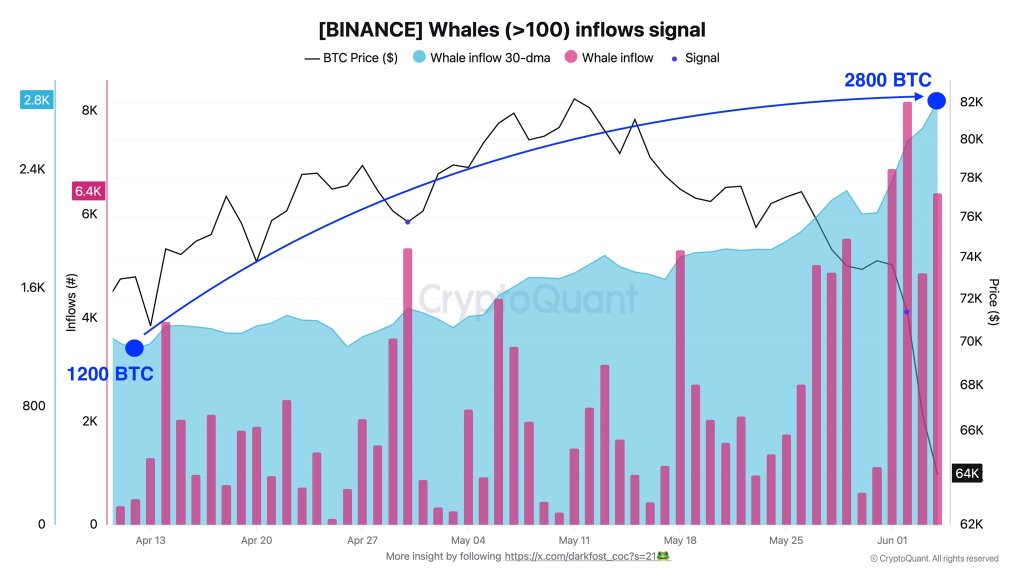
Bitcoin Whale deposits indicate increasing selling risk
The inflow of currency does not mechanically prove that coins have already been sold. However, large transfers to trading venues are typically seen as indicative of potential selling intentions, especially when they occur during a rapid correction rather than a period of accumulation or sideways consolidation.
Related reading
Darkfost has framed the current increase in that context. “These dynamics suggest that the ongoing correction is prompting some whales to move their BTC back to the exchange, presumably with the intention of selling,” the analyst wrote. “This behavior looks more like emotional risk management than a well-considered strategic decision.”
That distinction is important for market interpretation. A strategic rebalancing usually involves a pre-planned execution, portfolio rotation or a controlled reduction in exposure. In contrast, panic-induced currency inflows usually appear after price damage has already forced major investors to reassess risk. They can worsen pressure in the short term, but they can also occur late in a corrective sequence.
Related reading
Bitcoin was trading around $62,533 at the time of writing, after an intraday low of $61,407 and a high of $64,380. That puts the market close to the levels referenced in Darkfost’s comparison to February, when whale inflows on Binance last reached similar intensity during Bitcoin’s decline to $60,000.
February comparison raises the key question
The February reference is the focal point of the analysis. Darkfost noted that the last similar surge in Binance whales inflows occurred when Bitcoin fell below $60,000 earlier this year. In that case, the increased inflow reflected stress after a sharp decline, rather than an early warning signal prior to full movement.
“For reference, the last time whale inflows on Binance reached such levels was during Bitcoin’s dip below $60,000 in early February,” the analyst wrote. “This development creates additional selling pressure in the short term. That being said, these types of panic-driven actions often arrive long after the fact, as was the case in February.”
At the time of writing, BTC was trading at $62,332.
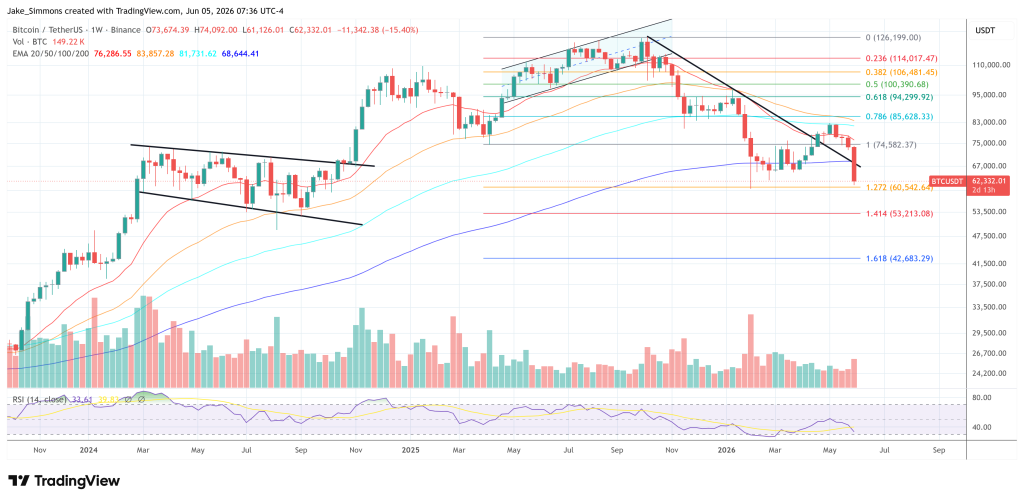
Featured image created with DALL.E, chart from TradingView.com