
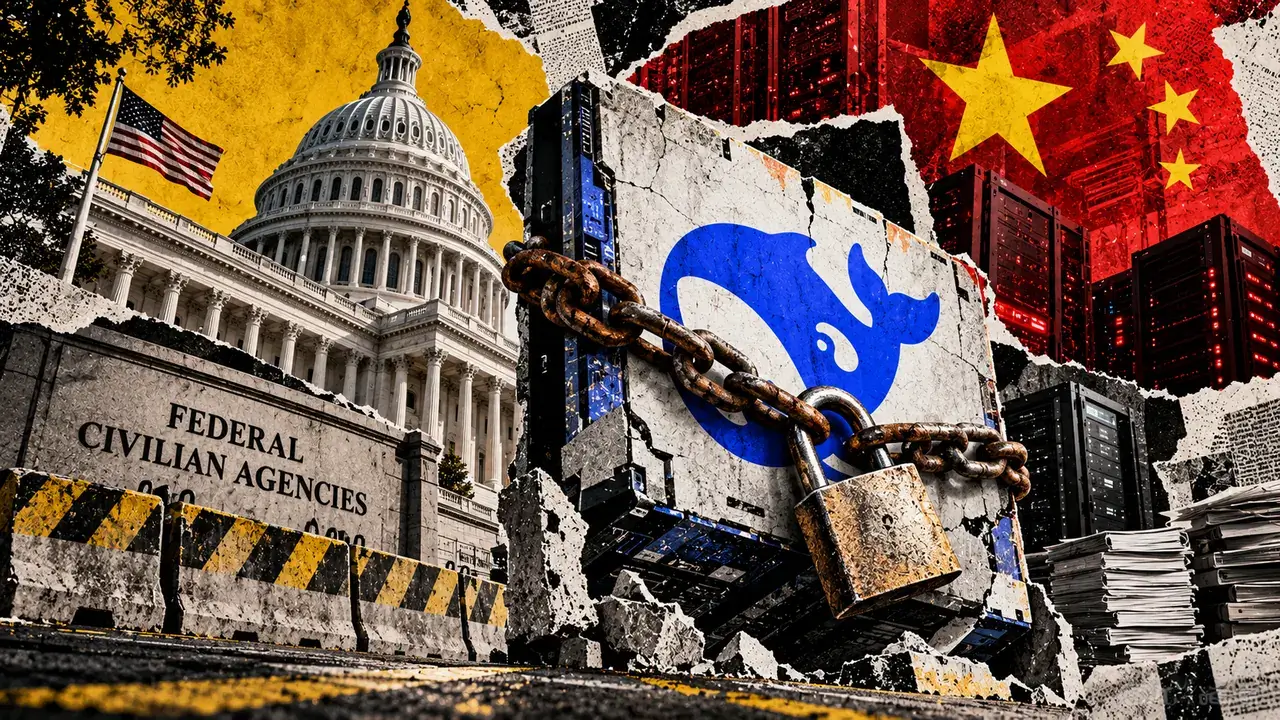
The recent directive from the US government ordering federal agencies to remove DeepSeek technology and extending restrictions to third-party products using its AI models has sent shockwaves through the technology industry. The Department of Homeland Security (DHS) issued the directive on Oct. 20, mandating federal civilian agencies to eliminate products from the Chinese company’s technology from their IT systems and prohibiting future purchases.
The concerns raised by DHS regarding national security risks associated with DeepSeek’s Chinese operations have prompted this action. There are fears that sensitive information could be accessed and transmitted to servers in China, posing a significant threat to US government activities. Additionally, the department highlighted potential security vulnerabilities in DeepSeek’s technology, further justifying the need for restrictions.
This move by the US government reflects a broader effort to limit Chinese technology in government infrastructure, following similar actions taken by other agencies and state governments. While China has condemned the decision, accusing the US of politicizing technology, the order has created new compliance obligations for federal technology suppliers.
Affected contractors now face the challenge of assessing whether products incorporating DeepSeek implementations can continue to serve government customers. This may require replacing components or seeking exemptions, potentially benefiting rival AI providers in the process.
In a surprising turn of events, DeepSeek announced on the same day that it would open-source DeepInfer, the inference framework powering its AI services. This release provides developers with access to technology previously used internally by the company and includes optimized computing kernels, distributed inference capabilities, and processing tools to enhance AI responses.
The release of deepseek-recipe, a collection of software components handling token encoding and API request processing, further demonstrates DeepSeek’s commitment to enabling developers worldwide to deploy and benefit from its technology. By expanding its open-source strategy, DeepSeek aims to attract businesses looking to reduce reliance on closed AI services from other providers.
DeepInfer currently supports DeepSeek-V4.1-Flash, a model with 552 billion parameters designed for efficient task-specific activations. The model’s architecture requires less memory and storage for inference caching, allowing for more efficient processing of requests using fewer computing resources.
Distributed under the Apache 2.0 license, DeepInfer supports Nvidia SM100 and Huawei Ascend 950 chips, providing developers with options across American and Chinese hardware. This compatibility with Huawei’s processors could support China’s efforts to develop domestic AI infrastructure amid restrictions on advanced semiconductor exports.
While the release of DeepInfer offers cloud providers and businesses outside the federal market the opportunity to run DeepSeek models on their infrastructure and customize the technology to their needs, it does not automatically exempt products from the federal order covering third-party implementations. This development marks a significant shift in the AI landscape and could have far-reaching implications for the industry as a whole.