
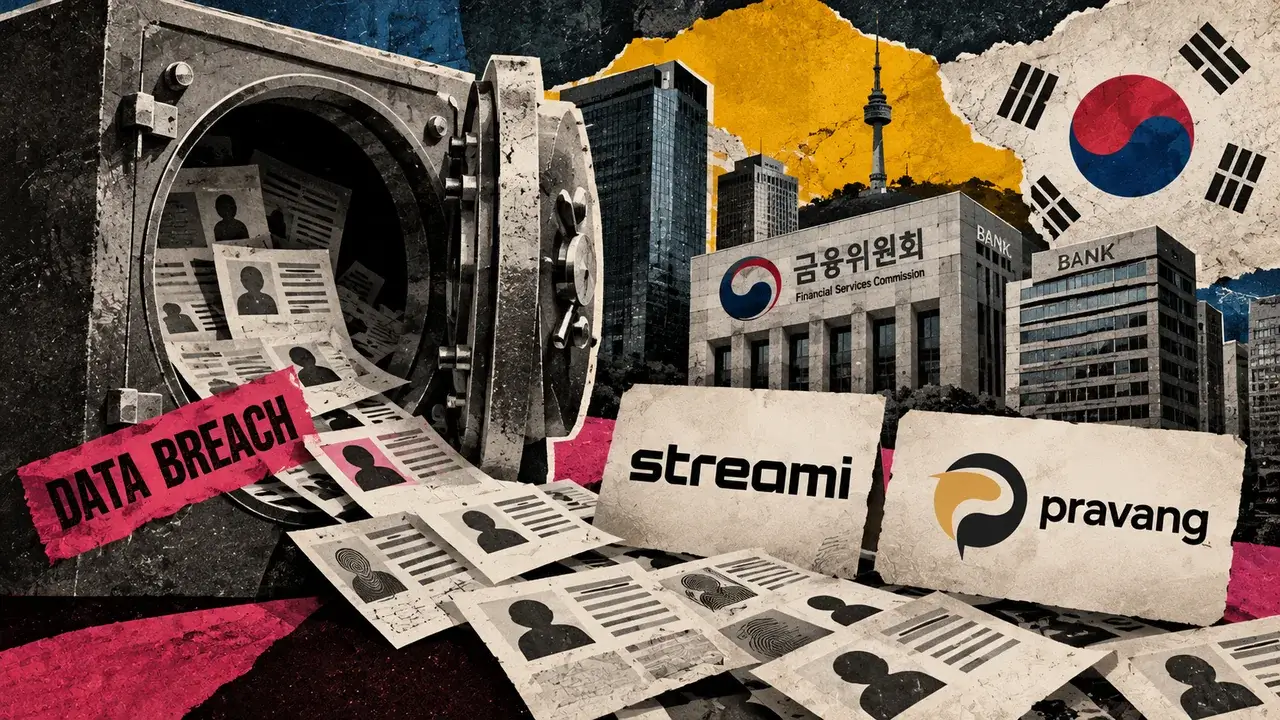
South Korea’s Financial Services Commission recently revealed that 16 financial companies, including crypto businesses Streami and Pravang, were affected by data breaches. The list of companies impacted by the breach included major banks such as Shinhan, Kookmin, Busan, and Hana banks, as well as other financial institutions.
According to the FSC’s disclosure on October 14, approximately 100,000 pieces of customer data were exposed in the breach, including names, contact details, resident registration numbers, and email addresses. While account passwords and credit card numbers were not identified as leaked, the FSC stated that investigations by the Financial Supervisory Service and Financial Security Institute are ongoing to determine the attack methods and potential linkage between incidents.
In response to the breach, all 555 companies in the financial sector completed a 12-point security checklist by October 8. The checklist revealed that 425 companies reported their security arrangements as appropriate, while 130 companies identified areas needing improvement. Common weaknesses included missing software updates, inadequate system monitoring, and authentication/access control vulnerabilities.
The FSC plans to implement broader security checks and enhance accountability measures across financial companies. Proposed initiatives include more frequent vulnerability assessments, faster sharing of threat information, and increased security support for smaller firms. Additionally, the FSC aims to strengthen CEO accountability and impose more effective sanctions for non-compliance.
Furthermore, the FSC intends to consider easing rules on separating computer networks to enable AI-based defenses. While the detailed scope and schedule of these initiatives are still being finalized, the FSC’s goal is to enhance cybersecurity measures and protect customer data in the financial sector.
In related news, the Financial Intelligence Unit recently disclosed blocking decisions for 27 unregistered crypto websites, including popular platforms like KuCoin and MEXC. This move is part of South Korea’s efforts to regulate the crypto industry and safeguard investors from potential risks associated with unregistered exchanges.
Overall, the FSC’s proactive approach to addressing data breaches and enhancing cybersecurity measures underscores the importance of safeguarding customer information in the financial and crypto sectors. By implementing stricter regulations and promoting accountability, South Korea aims to create a more secure environment for financial transactions and digital assets.