
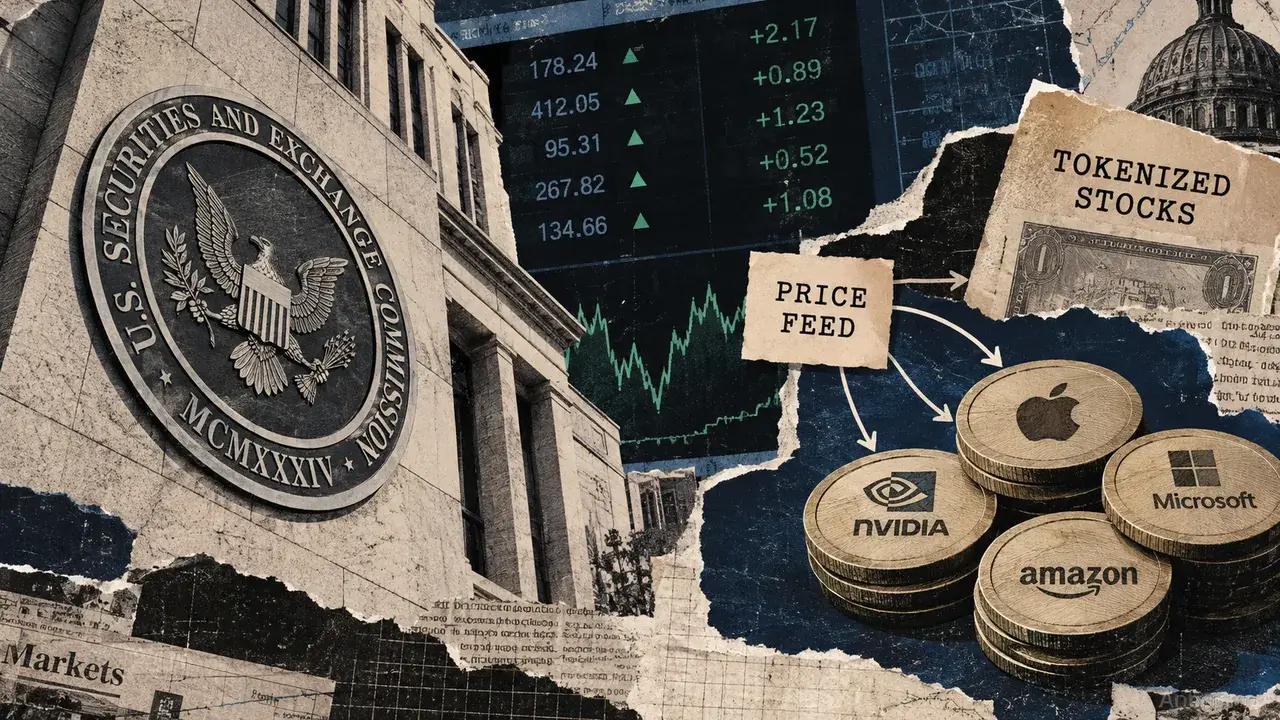
Tokenized stocks that fall under the SEC’s September exemption must uphold equivalent shareholder rights, even though they may operate on trading venues that are not subject to certain Regulation NMS protections. This means that investors need to carefully consider both the nature of the shares they are buying and how their orders are priced and executed.
Douro Labs, a market-data provider, recently submitted a request to the SEC for guidelines on evaluating external price feeds for tokenized stocks. This request is aimed at ensuring transparency and accuracy in the pricing of these assets. Douro Labs is involved in the development and operation of Pyth Network and Pyth Pro, which gives them a vested interest in maintaining high standards for market data.
The SEC’s September 17 order provides temporary relief for venues offering automated market maker pools for eligible tokenized NMS stocks. These pools allow approved participants to trade against committed assets using software. The order also includes relief for certain liquidity providers using their own capital. However, the scope of the order does not cover all types of tokenized securities, such as synthetic exposures, rights, and warrants.
For tokenized shares to be eligible under the SEC’s exemption, the trading venue must ensure that they carry the same rights and privileges as traditional stocks of the same class. This includes rights to dividends, voting, and a share of the company’s assets in case of liquidation. It is crucial for investors to understand both the ownership rights associated with the shares and the terms under which their orders are executed.
The order also mandates certain disclosures and safeguards for venues offering tokenized stocks. FINRA-member brokers are required to uphold best-execution duties when handling transactions involving these securities. It is essential for investors to be aware of these regulations and protections when trading tokenized stocks.
In terms of market data, venues are required to disclose how they use external data sources or oracles for pricing and reporting. These disclosures must include information about data providers, sources, purposes, and risk controls. Douro Labs has proposed criteria for evaluating the quality of external data feeds, emphasizing factors like independent contributors, manipulation resistance, and transparency.
Best execution remains a key consideration for investors trading tokenized stocks. FINRA members are obligated to conduct diligent reviews to ensure that trades are executed at the best possible prices under prevailing market conditions. This duty applies to both agency and principal trades, and brokers must regularly assess execution quality and market competitiveness.
When evaluating tokenized stocks, investors should look beyond the provider’s name and consider how external data influences pricing, valuation, and execution. Understanding the role of external data feeds, pricing controls, and broker execution reviews is essential for making informed investment decisions in this emerging market.