
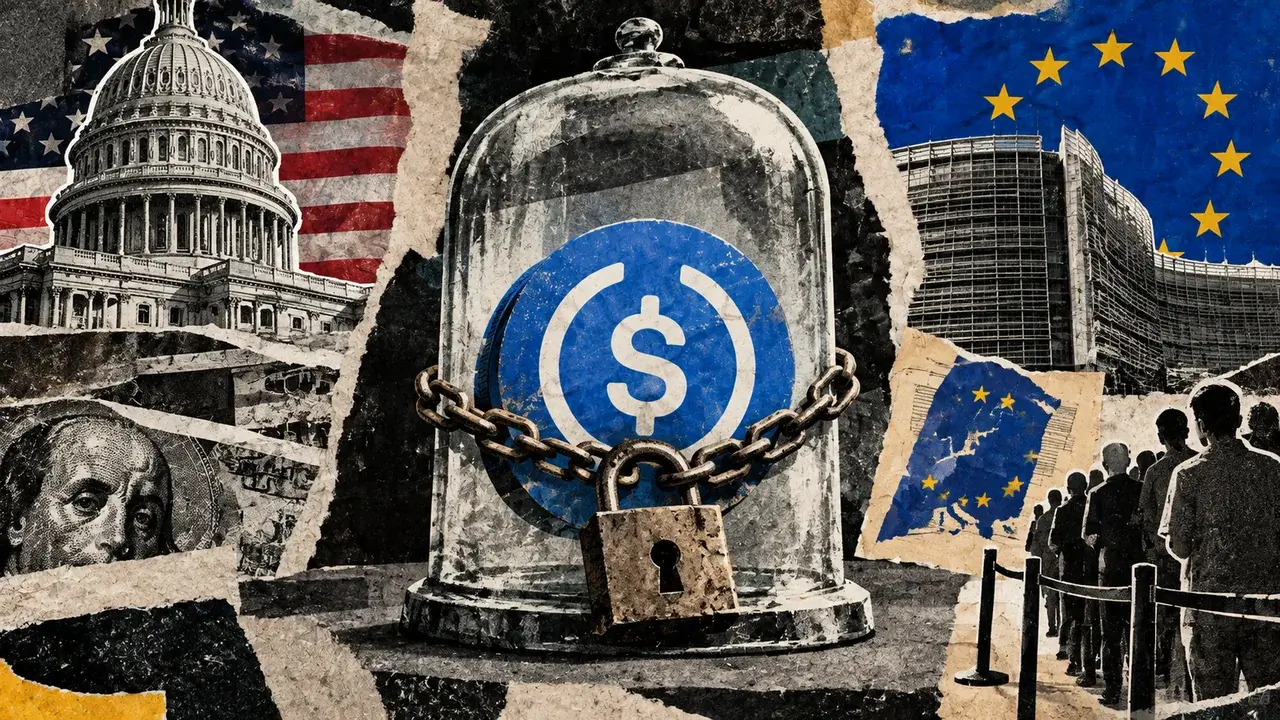
Circle, a major player in the cryptocurrency space, is advocating for changes to the European Union’s Markets in Crypto-Assets Regulation (MiCA) in order to allow foreign-regulated stablecoins to enter the market more easily. They are specifically calling for a recognition regime that would enable overseas stablecoin companies to distribute tokens in Europe without having to go through the full authorization process. This proposal is part of a larger effort to attract more global market participants to operate within the EU’s regulatory framework.
Currently, only three of the top 25 stablecoins by market value – USDC, USDG, and EURC – are regulated under MiCA, despite the authorization of approximately 30 e-money tokens since the framework was implemented. Circle’s proposal involves the European Commission determining if a foreign jurisdiction’s regulatory regime is equivalent to EU standards. If deemed equivalent, the European Banking Authority (EBA) would then recognize individual issuers, allowing them to distribute tokens through locally licensed institutions while remaining primarily supervised in their home countries.
In addition to advocating for easier market entry for foreign-regulated stablecoins, Circle is also challenging certain requirements under MiCA, such as the rule that e-money token issuers must keep a certain percentage of reserves in commercial bank deposits. They argue that this requirement increases exposure to bank credit and counterparty risk, and are pushing for a broader liquidity standard instead.
Circle is not alone in their concerns about MiCA regulations. Tether’s CEO, Paolo Ardoino, has also raised issues with the reserve requirements, warning that they could create systemic vulnerabilities if banks were to fail. Both Circle and Tether are now calling for changes to these regulations in order to reduce risks for stablecoin issuers.
While Circle’s proposal offers a potential pathway for foreign issuers to enter the European market, it ultimately depends on the outcome of the Commission’s MiCA review and any resulting legislative amendments. In the meantime, regulators are considering tighter controls to address risks associated with stablecoins, particularly those involving multiple issuers from different countries.
As the cryptocurrency landscape continues to evolve, it is clear that regulatory frameworks like MiCA will play a crucial role in shaping the industry. By advocating for changes to these regulations, companies like Circle are striving to create a more inclusive and secure environment for stablecoin issuers and users alike.