
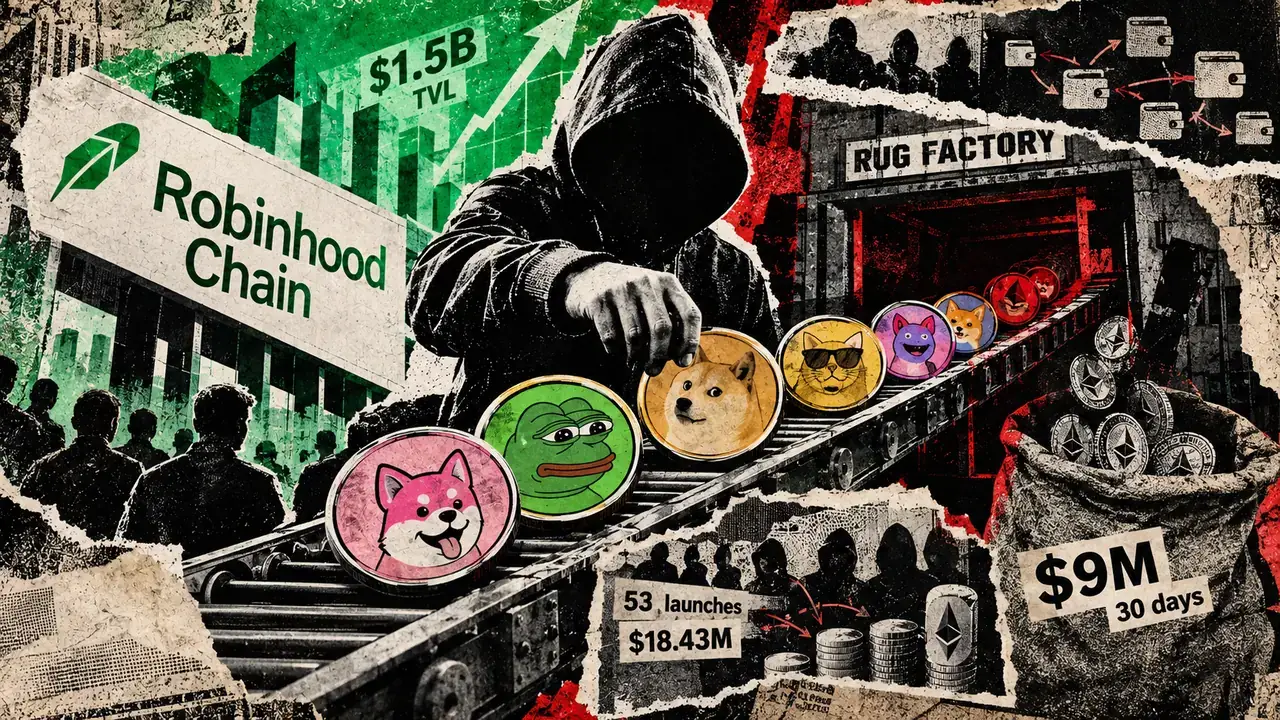
A new suspected memecoin rug factory has been discovered on Robinhood Chain, a rapidly growing network that has been attracting coordinated scam activity. Blockchain security firm GoPlus recently revealed that they identified a high-risk operation behind hundreds of memecoins that had funneled over $9 million through a common fund-consolidation network in the past month.
The operation utilized newly created wallets to amass and sell tokens before transferring the proceeds to related addresses. The main consolidation wallet involved in this operation had approximately 3,589 ETH, valued at around $9.49 million, flowing back and forth in its latest 400 transactions as of Sept. 28. While this figure represents gross flows and not net profits or losses for investors, it shed light on a structured process where funds from one launch were used to finance the next.
Operators of this suspected rug factory would create a token based on a popular narrative, distribute the supply among new wallets with minimal transaction history, and sell the tokens through contracts like PonsV2Helper and UniversalRouter. The ETH generated from these sales would then be routed through local sweep wallets before reaching a larger consolidation cluster. This setup made it difficult to determine how much of a token one operation actually controlled, as the proceeds were dispersed across multiple seemingly unrelated addresses.
Unlike a traditional rug pull where liquidity disappears suddenly or buyers are prevented from selling, this operation focused on coordinated ownership and exit strategies across multiple wallets, followed by the recycling of proceeds into subsequent launches. This tactic aims to create the appearance of independent market activity while consolidating profits behind the scenes.
This discovery comes shortly after another suspected rug operation was uncovered on Robinhood Chain, where approximately $18.43 million was extracted from at least 53 memecoin launches over a two-month period. Both operations shared similarities, such as heavy use of Pons V2 infrastructure, large batches of wallets to disguise supply concentration, and capital moving from one launch to the next.
The rapid growth of Robinhood Chain, which has surpassed $1.5 billion in total value locked and generated an estimated $50 million in revenue in just three months, has raised concerns about the proliferation of fraudulent activities on the network. With the potential to reach a large existing financial customer base through its brokerage platform, developers and users alike must remain vigilant against abusive token launches and rug pull schemes.
As Robinhood Chain continues to expand and attract more users, the importance of implementing safeguards against fraudulent activities becomes paramount. Ensuring a safe and secure environment for users while maintaining an open and accessible network is crucial for the long-term success of the platform. By staying vigilant and proactive in detecting and preventing scams, Robinhood Chain can protect its users and maintain its reputation as a trustworthy and reliable network for all participants.