
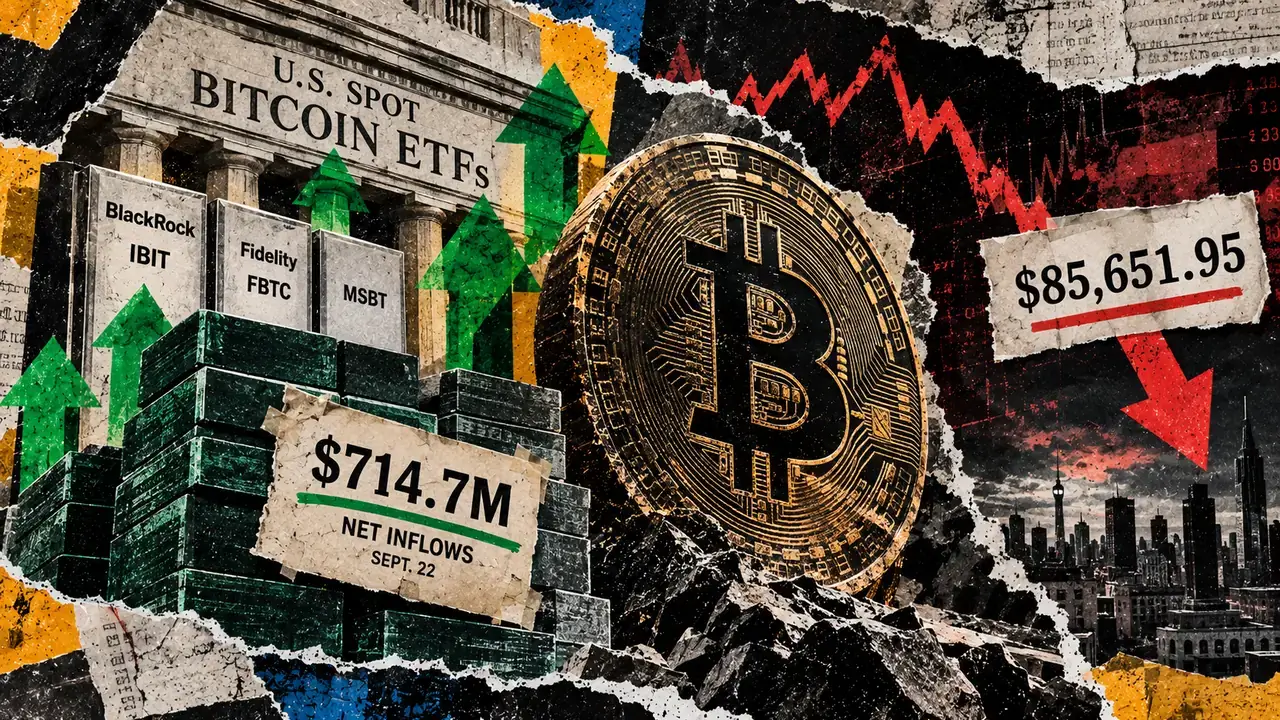
Bitcoin exchange-traded funds (ETFs) have seen a resurgence in investor interest, with US-listed funds attracting over $1.7 billion in fresh capital this week. This influx of funds has not only erased the 2026 flow deficit but also positioned the ETFs to surpass their strongest inflow week of the year.
BlackRock’s iShares Bitcoin Trust (IBIT) has been a major beneficiary of this renewed demand, attracting approximately $1.02 billion over four trading sessions. This surge in ETF buying has helped repair a $5.7 billion deficit that the market had accumulated earlier in the year.
The increase in demand for ETFs began gathering pace in August after Treasury Secretary Scott Bessent indicated increased purchases of longer-dated government bonds. This development, coupled with Bitcoin’s 35% rally from $64,100 to over $85,000, has led to about $4.6 billion flowing into ETFs over the same period.
Despite the recent gains, profit-taking has started to absorb some of the ETF bid as Bitcoin slipped below $85,000. Short-term holders have transferred about 47,600 BTC held at a profit to exchanges, with the coins worth more than $4 billion at prices near $85,000. This influx of supply from profitable short-term holders has led to a temporary loss of momentum in Bitcoin’s rally.
While the strong demand for ETFs has provided support for Bitcoin’s price, Santiment has highlighted potential cautionary signals. The analytics firm noted that unusually large ETF inflows often coincide with local market turning points, indicating that investors may be chasing exposure after significant price moves. This pattern suggests that exceptionally large creations could leave the market vulnerable once demand begins to fade.
As ETF demand continues to rise, the market will need to absorb the supply from profit-taking short-term holders. A slowdown in ETF demand alongside elevated exchange deposits from short-term holders could leave Bitcoin reliant on other spot buyers to sustain its rally. Overall, the current market dynamics suggest a delicate balance between institutional demand, profit-taking, and potential market reversals.