
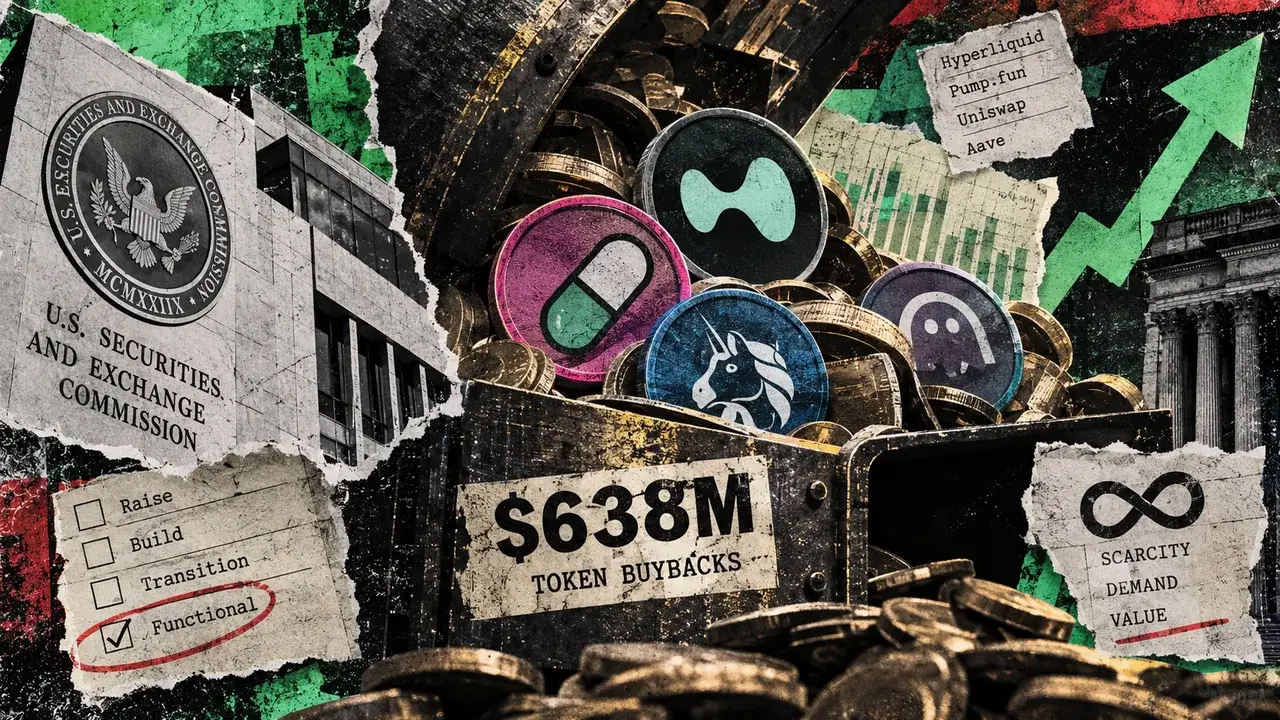
The world of cryptocurrency has seen a significant rise in token buybacks in recent years, with crypto projects spending a record $638 million on buybacks by late August 2026. This figure is up from $545 million during the same period in 2025, highlighting the growing trend of token repurchases in the industry. Hyperliquid and Pump.fun were the two main contributors to this total, accounting for nearly 90% of the overall amount spent on buybacks.
However, the legality of these buyback programs has been a point of contention, with the Securities and Exchange Commission (SEC) addressing the issue on Sept. 25. The SEC’s Division of Corporation Finance clarified that buyback announcements for non-security crypto assets on functional networks do not necessarily fall under the purview of securities laws. This distinction is important for projects looking to engage in buyback programs without running afoul of regulatory guidelines.
The SEC’s regulatory framework for crypto assets is evolving, with proposals like Regulation Crypto Assets offering exemptions for fundraising and guidelines for project transitions. These proposals aim to provide a clear path for projects to navigate the regulatory landscape while engaging in token buybacks and other activities.
The money flowing into token buybacks is substantial, with Pump.fun allocating half of its revenue to buying and burning its native token, PUMP. Hyperliquid has also bought and burned over $1.3 billion of its token, HYPE, since its launch. These buyback programs are aimed at reducing token supply and creating demand, ultimately benefiting token holders.
The rights associated with these tokens are limited, with holders typically not having direct ownership or rights to profits from the underlying protocol. Buybacks can impact token value and demand, but they are subject to governance decisions and can be paused or altered at any time.
Moving forward, the token buyback model is expected to become a standard practice in the crypto industry, with revenue and dilution-adjusted buyback yield becoming key metrics for valuing protocol tokens. As the regulatory landscape continues to evolve, projects will need to navigate these changes while ensuring compliance with securities laws.
Overall, token buybacks represent a way for crypto projects to reinvest revenue into their tokens, creating value for holders while maintaining control over their protocol’s financial operations. With clear guidelines and regulatory frameworks in place, these buyback programs can continue to thrive and contribute to the growth of the crypto ecosystem.