
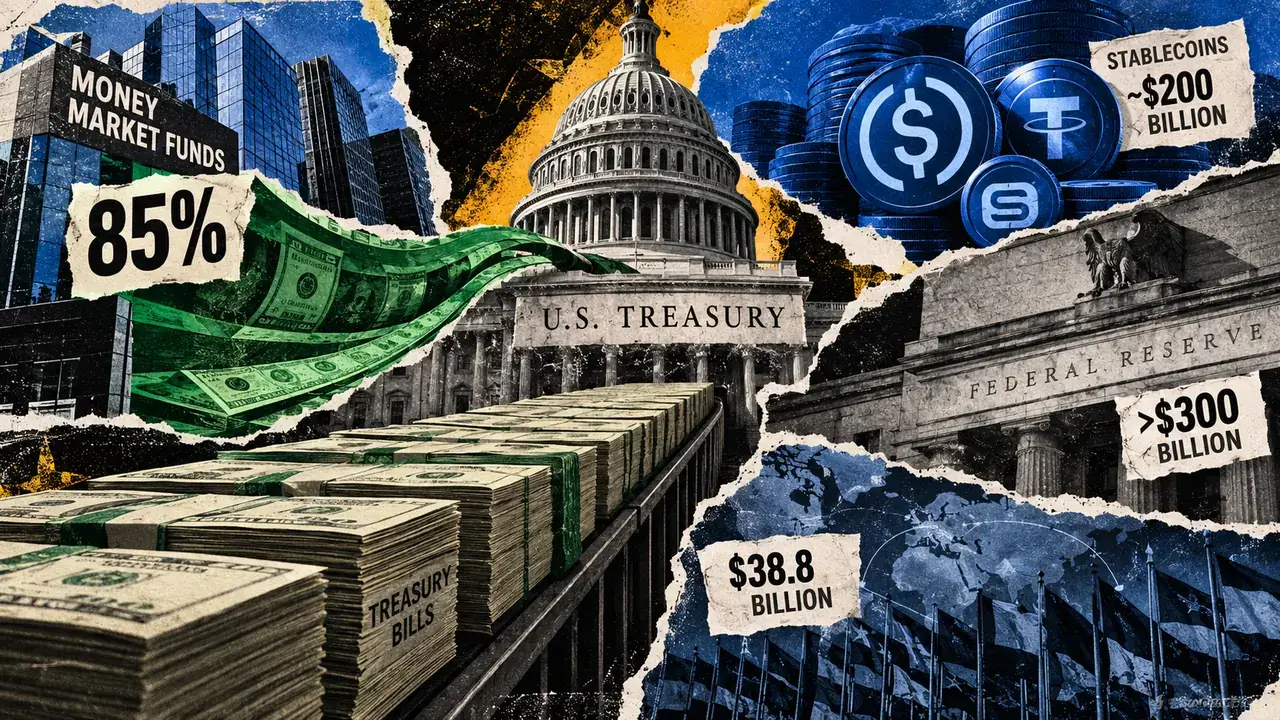
The recent surge in Treasury bill issuance by the US government has been largely absorbed by money-market mutual funds, accounting for approximately 85% of the increase. This influx of new supply, totaling over $550 billion in July and August, has been predominantly taken up by money funds, as reported by Deputy Treasury Secretary Francis Brooke on September 22.
While stablecoin providers also hold a significant amount of short-dated government debt, with holdings totaling nearly $200 billion, their impact on the recent surge in Treasury bills is not as pronounced as that of money funds. It is important to note that stablecoin reserves may be invested through government money-market funds and repurchase agreements, blurring the lines between different categories of buyers.
The breakdown of buyers in the Treasury market reveals four key figures, each measuring different aspects of demand. Money-market mutual funds absorbed the majority of the July-August supply increase, stablecoin providers hold a substantial amount of short-dated government assets, the Federal Reserve has been a major buyer through reserve-management purchases, and foreign residents have shown renewed interest in Treasury bills.
The Federal Reserve’s purchases of over $300 billion in Treasury bills in 2026 have contributed significantly to the increase in demand. These purchases are part of the Fed’s efforts to maintain ample reserves and manage its balance sheet composition. Foreign demand for Treasury bills also rebounded in July, following several months of declines.
Overall, the data illustrates a broad demand for short-term government debt, with money funds playing a significant role in absorbing the recent surge in Treasury bill issuance. While stablecoin providers could potentially become a larger source of demand as regulations evolve, traditional cash managers currently hold the clearest claim to the marginal demand behind the summer issuance wave.