
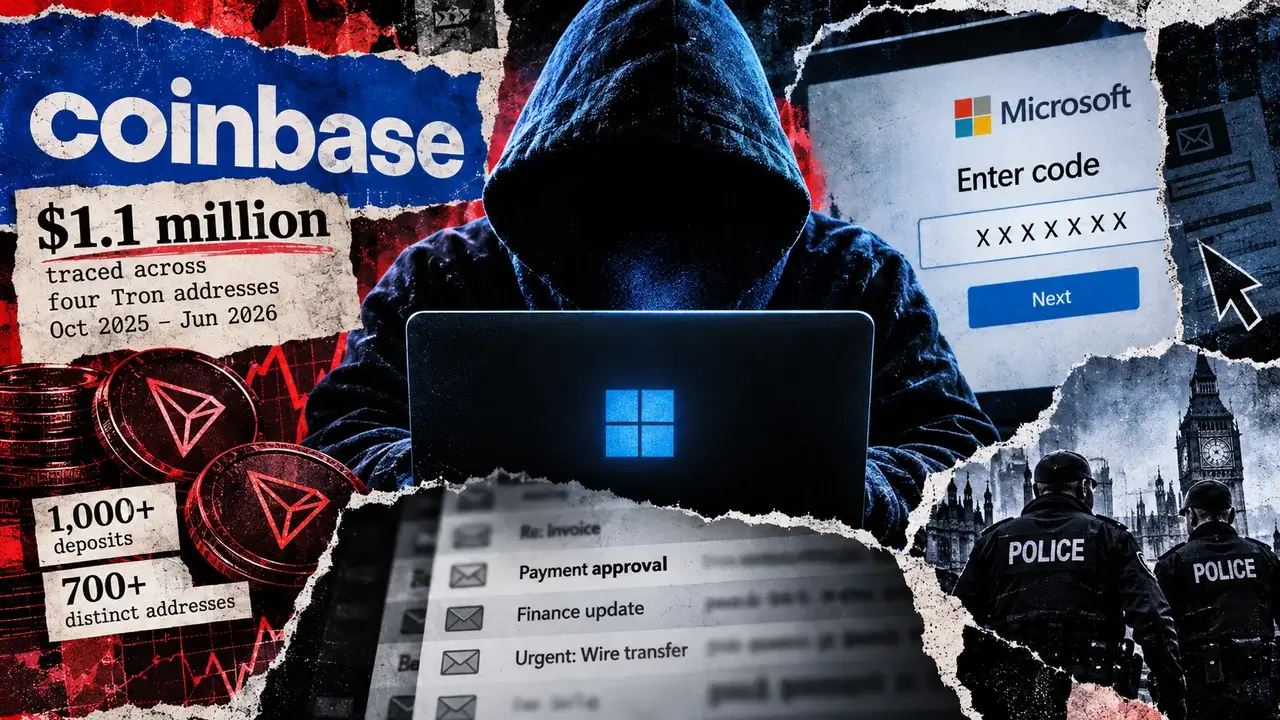
Microsoft and Coinbase joined forces to dismantle EvilTokens, an AI phishing service that had compromised more than 12,000 inboxes worldwide. The operation had quickly infiltrated over 10,000 organizations in various industries such as financial services, real estate, healthcare, and construction.
The collaboration between Microsoft and Coinbase led to the seizure of 50 websites used by EvilTokens and the disabling of over 150 related domains. Additionally, UK police arrested two individuals on suspicion of offenses related to the operation, although they were later released on conditional bail.
EvilTokens operated as a subscription service on Telegram, where customers paid an initiation fee of $1,500 and a recurring subscription of $500 for tools that facilitated account compromise, mailbox access, reconnaissance, and AI-assisted fraud preparation. The service exploited Microsoft’s device-code authentication to gain access to victims’ inboxes through phishing emails disguised as legitimate business communications.
Once inside a victim’s mailbox, EvilTokens utilized AI tools to automate tasks traditionally performed by attackers, such as reading correspondence, identifying money movers within an organization, and determining who had authority over payments. The platform could recommend individuals to impersonate and assist customers in carrying out targeted fraud with minimal manual effort.
Investigators discovered that parts of EvilTokens were built using AI-assisted coding tools, streamlining the technical aspects of the operation for both sides. Coinbase’s Global Intelligence team tracked approximately $1.1 million in revenue generated by EvilTokens across four Tron addresses and identified over 1,000 deposits from more than 700 distinct addresses.
The financial trail left by EvilTokens’ subscription model allowed Coinbase to trace payments to the platform and ultimately assist in attributing the operation to its alleged operators. Coinbase also investigated customers who had interacted with EvilTokens on its platform and referred relevant cases to law enforcement.
The disruption of EvilTokens prevented the service from expanding its toolkit to target Gmail and Okta accounts, potentially spreading its malicious activities to other identity platforms. Microsoft advised organizations to block unnecessary device-code authentication and tightly restrict it where operationally required. In cases of suspected compromise, Microsoft recommended revoking refresh tokens, forcing reauthentication, and temporarily disabling compromised accounts to mitigate further risks.
By dismantling EvilTokens and disrupting its infrastructure, Microsoft and Coinbase have successfully thwarted a sophisticated phishing operation that posed a significant threat to organizations worldwide. Their collaboration serves as a testament to the power of partnership in combating cyber threats and safeguarding digital ecosystems.