
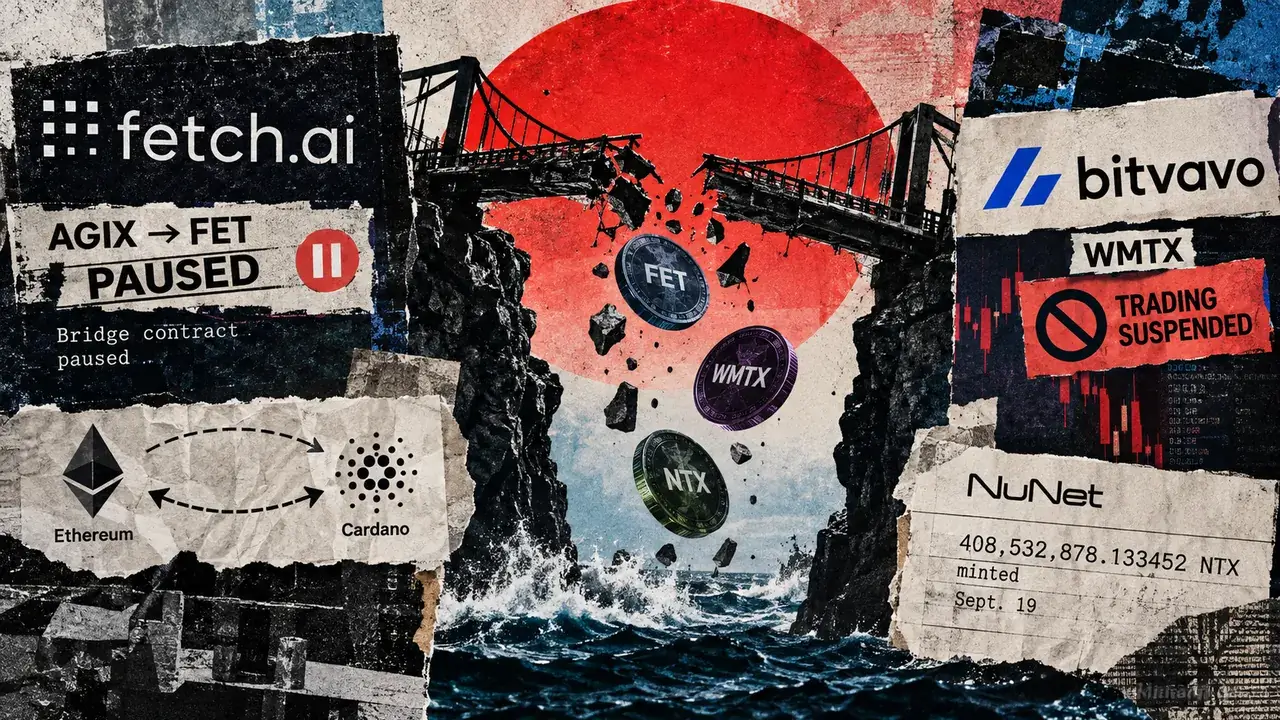
A significant cyber attack recently took place, resulting in the draining of 8.7 million FET tokens and the creation of 408.5 million NTX tokens using a compromised NuNet minter key. The attack, which occurred on September 19, targeted the Ethereum-side conversion contract used by SingularityNET’s bridge, resulting in the removal of FET tokens worth approximately $1.55 million at the time.
Following the attack, Fetch.ai took precautionary measures by pausing AGIX-to-FET conversions and its Ethereum-side bridge contract. It was determined that the affected infrastructure belonged to SingularityNET, specifically its Ethereum-Cardano bridge, while Fetch.ai’s own contracts and normal FET transfers remained operational.
A forensic report conducted by Athena identified the affected contract as TokenConversionManagerV3, the legitimate Ethereum-side lock-and-release component of SingularityNET’s bridge. The report revealed that the loss was attributed to a compromised backend authorization key, which allowed the attacker to execute the transaction and transfer the FET tokens to their wallet.
The NuNet minter key was also compromised in the attack, as it created 408.5 million NTX tokens and sent them to the same wallet that received the stolen FET tokens. This indicated a coordinated effort by the attackers to carry out the operation.
The attacker then began converting the assets, with the stolen FET tokens being exchanged for Ethereum and the newly minted NTX tokens being sold through decentralized liquidity venues. Despite liquidity constraints on the NTX side, the attacker managed to accumulate a significant amount of Ethereum and NTX tokens.
The disruption extended beyond the FET and NTX assets, as Bitvavo suspended WMTX deposits and withdrawals due to a security incident affecting the token. Historical data revealed that WMTX, FET, and NTX all utilized infrastructure connected to SingularityNET’s Ethereum-Cardano bridge ecosystem.
Fetch.ai is currently working with SingularityNET to investigate the incident and has paused conversions while the investigation is ongoing. Credential remediation is crucial for restoring the affected services, as the compromised authorizer and minter credentials need to be rotated or revoked to prevent further attacks.
Overall, the incident highlights the importance of maintaining robust security measures in the crypto ecosystem to prevent coordinated attacks and protect user assets. Monitoring the operational markers of Fetch.ai’s AGIX-to-FET conversion service and Ethereum-side bridge, as well as Bitvavo’s handling of the WMTX token, will be essential in assessing the security of the affected infrastructure moving forward.