
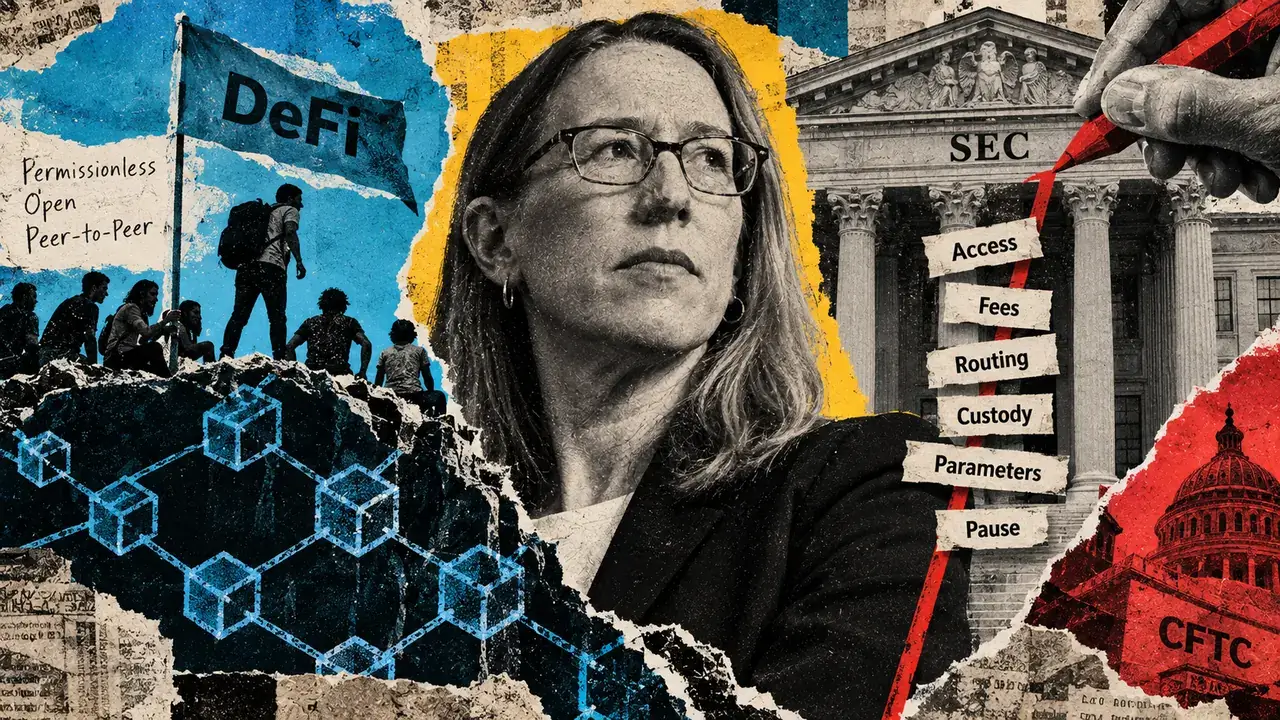
SEC Commissioner Hester Peirce recently made a significant statement regarding decentralized finance on September 17. She emphasized that investors should have the freedom to use permissionless smart contracts for peer-to-peer trading without needing any exemptions. This statement by Peirce highlights the importance of distinguishing between decentralized and centralized control in the realm of finance.
The main question that arises is how much control a software provider can maintain without crossing the line into becoming a regulated intermediary. Peirce’s statement reflects her personal stance on the matter, as a formal definition from the US Securities and Exchange Commission would require official Commission action. The SEC’s recent order on tokenized securities and a staff statement have shed some light on the issue, but the term “truly decentralized” remains undefined.
The SEC’s tokenized securities order, issued on September 17, provides temporary relief to a Tokenized Securities Venue (TSV) that facilitates permissioned trading in Tokenized NMS Stocks using automated market maker pools. The order outlines specific criteria for what constitutes provision or control in this context, such as setting fees, changing rules, and pausing trading. It emphasizes the importance of operational powers even in the realm of smart contract executions.
On the other hand, the SEC’s Division of Trading and Markets has issued a statement regarding crypto asset securities interface providers operating without broker-dealer registration. This statement sets out conditions for such providers, including restrictions on solicitation, investment recommendations, and custody of user assets. It also outlines guidelines for fee structures and user access to alternative routes.
In a parallel development, the Commodity Futures Trading Commission (CFTC) announced a staff no-action position on September 17 regarding passive software providers in the derivatives market. This position allows for more flexibility in terms of promotion and compensation compared to the SEC’s stance on interface providers. However, it also imposes strict limitations on certain activities to ensure accountability and transparency.
The key differences between the SEC and CFTC positions revolve around six main areas of control: custody, access, recommendations, routing, fees, and parameters. Each regulatory body has its own set of guidelines and conditions for software providers operating in the financial market. Technical design, disclosures, access arrangements, and marketing controls all play a crucial role in determining compliance with these regulations.
Ultimately, the decision on what constitutes “truly decentralized” lies with individual regulators and their interpretation of existing laws. The actions taken by the SEC and CFTC provide a framework for understanding the boundaries of control in decentralized finance, but the concept remains fluid and subject to ongoing scrutiny. Builders and users alike must be aware of the specific powers and responsibilities associated with different roles in the financial ecosystem to ensure compliance with regulatory standards.